
Share This Article
A campaign for social justice, peace, and human rights takes centre stage this Sunday, 15 November, marking the official launch of the annual Living Rights Festival which takes place across Cape Town. Under the theme of Rooting Change: Rupture and Renewal in a World of Disorder, artists, activists, scholars, young people and communities will explore challenges and possibilities through music, theatre, film, storytelling, panel discussions and workshops.
The month-long festival, now in its third edition, is organised by the Institute for African Alternatives, an independent, progressive organisation committed to alternative social and economic policies in and beyond South Africa.
“We gather at a time when our world seems increasingly fractured by war, inequality, violence and uncertainty,” says Institute for African Alternatives festival director Nazeema Mohamed.
“Yet even in these troubled times, we find extraordinary expressions of courage, compassion, creativity and solidarity. People continue to resist injustice, defend human dignity and imagine a world beyond divisions and cruelties.”
The festival opens with a conversation on violence, humanity and renewal at the Central Methodist Mission, Greenmarket Square, on Sunday 15 November at 17h00.
“The Insurrections Ensemble follows with Defiant Currents, a vibrant encounter between African and Indian musical traditions. Featuring soaring voices, violin, sarod, guitar, indigenous bows and percussion, this gathering of exceptional musicians from South Africa, Ethiopia, the DRC and India brings poetry alive through music that speaks to grief, defiance and hope,” says Mohamed.
The launch speakers are:
• Professor Pumla Gobodo-Madikizela, director of the Centre for the Study of the Afterlife of Violence and the Reparative Quest, at Stellenbosch University.
• Professor Nomusa Makhubu, Professor of Art History at the University of Cape Town, where she directs the Institute for Creative Arts. She is also the founder of Creative Knowledge Resources, an open-access arts platform.
• Mike van Graan, an award-winning playwright and cultural activist who grew up in Athlone on the Cape Flats. A former adviser to the Minister of Arts and Culture, he helped shape post-apartheid cultural policy. His plays explore the contradictions of South African democracy and questions of justice, power and human dignity.
“Our programme invites us to confront the world as it is and imagine what it could become,” says Mohamed. “At its heart is a question: what does it mean to be human in a world where human dignity is so routinely violated?
“This year, we pay particular attention to children ‒ their lives, rights and futures, and our collective responsibility to protect them. Hope is not simply the expectation of a better future, but the courage and commitment to help bring that future into being.”
The festival programme tracks histories of exile, urban struggle and memory:
Documentaries
• A Brother with Perfect Timing (16 Nov, 18:15): Chris Austin’s portrait of legendary jazz musician Abdullah Ibrahim explores music, exile, and how Black cultural creativity sustained identity under apartheid.
• The Sound of Who We are (23 Nov, 18:15): Two short films explore South Africa’s new jazz generation.
• Resisting Erasure! (18 Nov, 13:00): Director Raoul Dyssell’s documentary on the 2025 Living Rights Festival.
• Dilemma (1962) (30 Nov, 18:15): A secret piece of apartheid-era filmmaking adapted from Nadine Gordimer’s A World of Strangers, highlighting Black urban life, with performances by jazz pioneers.
• Mother City (7 Dec, 14:00): Miki Redelinghuys and Pearlie Joubert’s documentary follows Cape Town housing activists.
• Bones (7 Dec, 16:00): Nomandla Vilakazi’s documentary maps the 2002 journey to bring Sarah Baartman’s remains home, with poetry by Diana Ferrus.
• Salt River High 1976: The Untold Story (7 Dec, 18:00): Anwar Omar’s film recounts how a learners’ march to Parliament mobilised students, workers and communities.
Panels & Public Dialogues
Scholars and activists unpack complex global and local realities:
• Student and Youth Resistance (18 Nov, 10:30): Saleem Badat, Anwar Omar, Emile Jansen and UWC SRC President Mcntosh Khasembe connect historical student resistance with current struggles.
• India Today: A New Political Upsurge (22 Nov, 17:00): Panelists Amrita Pande, Ruchi Chaturvedi and Sumangala Damodaran dissect democratic resistance movements using humour, poetry and song.
• Intergenerational Dialogue (28 Nov, 10:00): Hosted at Gogo’s Community Kitchen in Gugulethu, Pamela Silwana and musician Behle Ka Langa facilitate a community conversation.
• The Human Cost of War Profiteering (10 Dec, 18:00): This discussion examines the global military-industrial complex, its impact on human rights and corporate accountability, connecting these concerns to the Rheinmetall Denel Munition factory in Macassar, where a 2018 explosion killed eight workers.
Literary Readings, Theatre & Shared Reflections
• Samaritan (29 Nov): A rehearsed reading of Mike van Graan’s poetic monodrama performed by Dr Katlego Chale. This reimagines a biblical parable to confront ongoing human suffering in Gaza.
• The Architecture of Complicity (2 Dec, 18:00): Author Azad Essa joins Professor Usuf Chikte at The Book Lounge to discuss his hard-hitting book, The Architecture of Complicity, tracking military and economic relationships.
• Poetry, History, Music and the Struggle for Justice (12 Dec, 14:00): Authors Brian Williams and Patric Tariq Mellet intertwine poetry and history in a conversation about injustice and resistance.
• Feeding the Soul When the World Disappoints (13 Dec, 14:00): Palestinian storytelling, music and shared food in Pinelands.
Youth, Solidarity & Interactive Showcases
• After 8 Sistahood Night Walk (19 Nov, 18:30): Women and non-binary participants reclaim public spaces in Khayelitsha through a night walk, stories and music, exploring segregation and safety.
• Palestinian Solidarity Day (29 Nov, 14:30): A gathering of remembrance and hope, centring on the Mothers for Gaza shroud. This is a poignant 20-metre memorial created by Cape Town volunteers, bearing the handwritten names of over 22,000 Palestinian children killed in the conflict.
• Youth Week (30 Nov- 4 Dec): Young people explore rights, identity and communities through theatre and storytelling. This culminates in a public showcase and open mic festival.
Locations
Core activities take place at the Central Methodist Mission on Greenmarket Square, The Book Lounge on Roeland Street, and the Castle. Film screenings and youth workshops take place at Bertha House, Mowbray, alongside readings and showcases at Theatre Arts and the Magnet Theatre in Observatory.
Community-led dialogues, solidarity walks and specialised events are at the University of the Western Cape and other venues.
Booking details
• Paid events (launch event, film screenings, drama): Tickets for the 15 November launch cost R200, book on Quicket. Book for the Samaritan reading through Theatre Arts. Purchase other tickets through Quicket.
• Free, registration-required events: Book seats via Quicket.
• Open-access gatherings: Major public action events do not require prior registration or booking.
View the programme:
https://ifaaza.org/living-rights-festival-2026-view-the-programme/
Watch the 2025 Living Rights Festival documentary trailer: https://www.youtube.com/watch?v=xwCyk_Ymebk
Captions for 2025 Living Rights Festival images (Credit Raoul Dyssell)
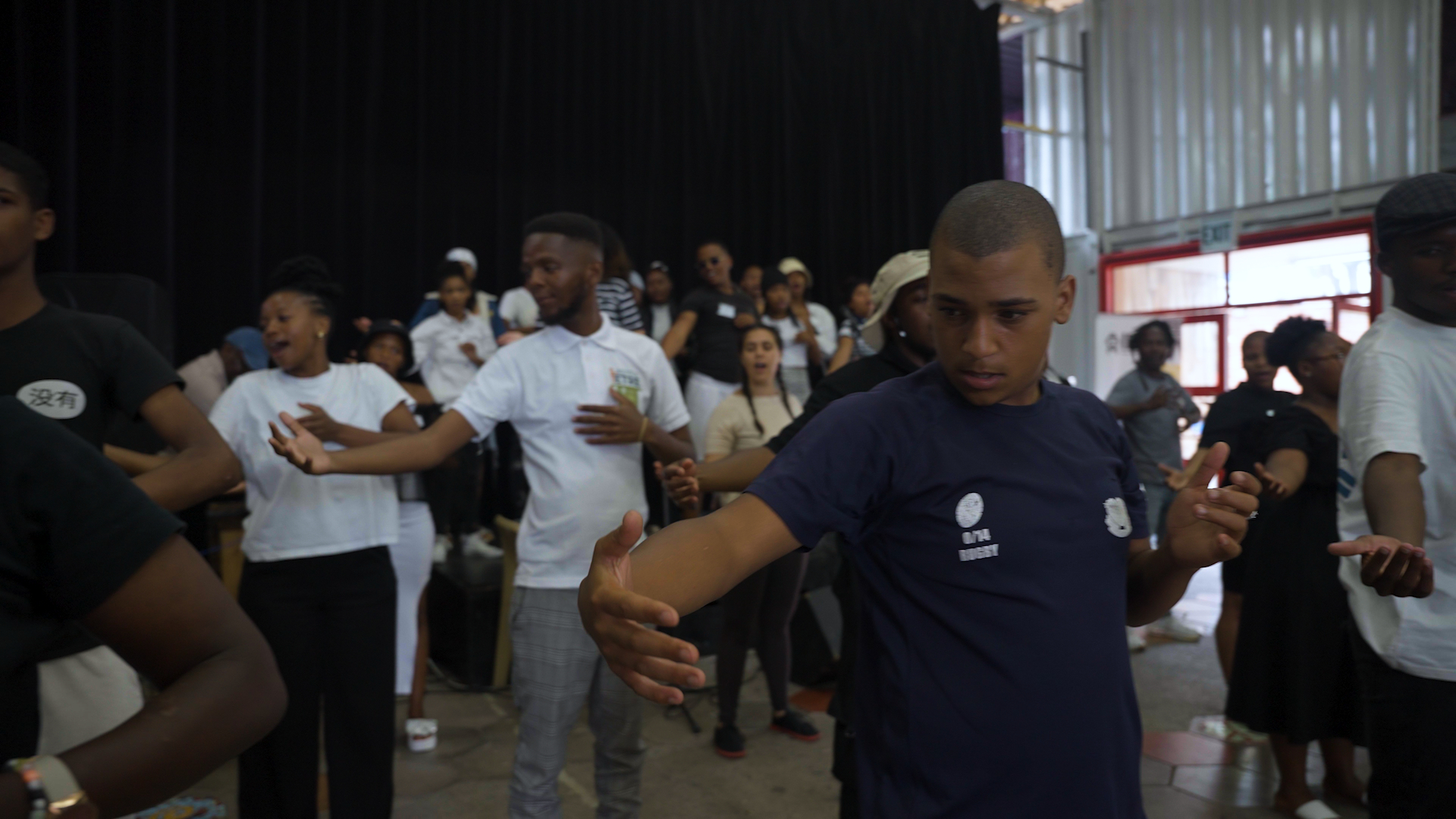
1. Youth Week dance and movement facilitated by Ko Kopanong Theatre Group at Guga S’Thebe Arts and Culture Centre in Langa.
2. Performer Dope Saint Jude, UWC Women and Gender Studies 30th Anniversary: Queer(y)ing Leadership / Leadership & Feminist Transformation.
3. UWC Women and Gender Studies 30th Anniversary: Queer(y)ing Leadership / Leadership & Feminist Transformation. (Far left, Prof. Kopano Ratele and far right, Professor Farima Seedat.)
4. Opening of 2025 Living Rights Festival. (Left to right) Prof. Shamil Jeppe, Mary Tal, executive director Whole World Women Association, Prof. Pitika Ntuli and Prof. Suren Pillay.