

Share This Article
As the world continues to develop bringing us a new future, many aspects of human dignity and basic human rights are often overlooked. World Toilet Day is a United Nations international day observed every year on 19 November, which is meant to inspire action to tackle the global sanitation crisis and achieve water and sanitation for all by 2030. According to the United Nations, to date there are around 3.6 billion people living without ‘safely managed sanitation’ and around 673 million practicing open defecation.
In South Africa according to a report based on the General Household Survey published in 2019 by Stats SA, sanitation solutions increased by 20.4% between 2002 and 2019, growing from 61.7% to 82.1% with most improvements being made in Eastern Cape where now 87.6% homes are recorded as having access to sanitation, and in Limpopo with access increasing to 63.4%.
“Providing sanitation and clean running water is not only about dignity but also contributes to the health of the community,” explains Mario Correia, brand manager for Organico. “When some people within the community do not have access to managed sanitation, it becomes a health risk for others due to contaminated drinking water sources, rivers, crops etc. and therefore spreading diseases throughout the community.”
To prevent this from happening the provision of adequate sanitation cannot end with the building of a toilet. On site systems such as pit latrines will eventually reach capacity requiring a long-term maintenance plan to be put in place and budgeted for. Pit latrines are still seen as suitable sanitation within South Africa, with nearly 3 000 schools making use of pit latrines. Unfortunately, due to the lack of maintenance, cleaning and care these toilets are not always suitable for use and can cause the spread of diseases.
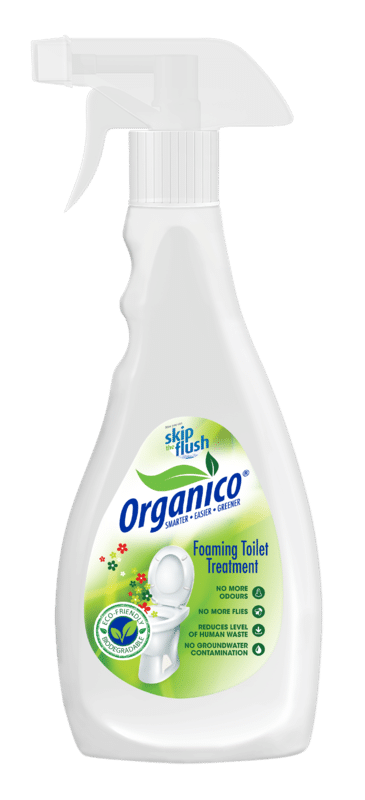
“The clearing out of pit latrines is not always done and other options need to be explored,” comments Mario. He goes onto states, that providing chemicals to “sanitise” the pit latrines, and even toilets as well, will not always help remove the waste without the use of water or physical labour. Due to the lack of water and sanitation a product such as Organico is an alternative eco-friendly treatment for toilets, pit latrines and septic tanks. It uses natural micro-organisms and enzymes to degrade faecal waste. This allows for all waste matter to be degraded without the need of additional support. This action combined with its carefully formulated fragrance, reduces waste and eliminates odour, while preventing disease-carrying insects attracted to the smell, thereby decreasing the risk of spreading germs. In areas where there is a lack of sanitation or water, or when action isn’t taken to rid the “managed sanitation” of the waste, Organico is an affordable option that also helps to stop the spread of diseases through communities.
Providing communities with sanitation should be the first step in the process, not the last. Giving communities the tools in which to keep these sanitation systems clean and waste free should be included in the roll out process, making communities aware of what is needed to be done to keep their families safe and healthy.