
Share This Article
New travel trends point to a growing preference for local experiences, coastal access and less time spent travelling
For years, a Cape Town holiday has been built around an unyielding itinerary: Table Mountain in the morning, the Winelands the next day, followed by a fleeting beach afternoon and dinner somewhere in town. But a structural shift in how people travel is putting less pressure on ticking off every attraction and more on choosing elements in the city within close reach.
Recent travel data reinforces the growing importance of hyper-local positioning in how travellers plan their stay. Tripadvisor’s early 2026 Summer Travel Index found that proximity to exclusive coastal edges and seaside spots is now a definitive factor for summer travellers, while the Hilton’s 2026 trends report notes that 84% of travellers prefer journeys that bring them closer to local culture and tradition.
Together, these insights point towards a more fluid kind of city break, where less time is forfeited moving between places, and more time is spent genuinely experiencing the destination.
Cape Town is particularly well suited to this style of unhurried travel. Its dramatic coastline, curated food scene, cultural landmarks and outdoor experiences are concentrated across a relatively compact part of the city, meaning a well-positioned base can turn a packed itinerary into something beautifully spontaneous.
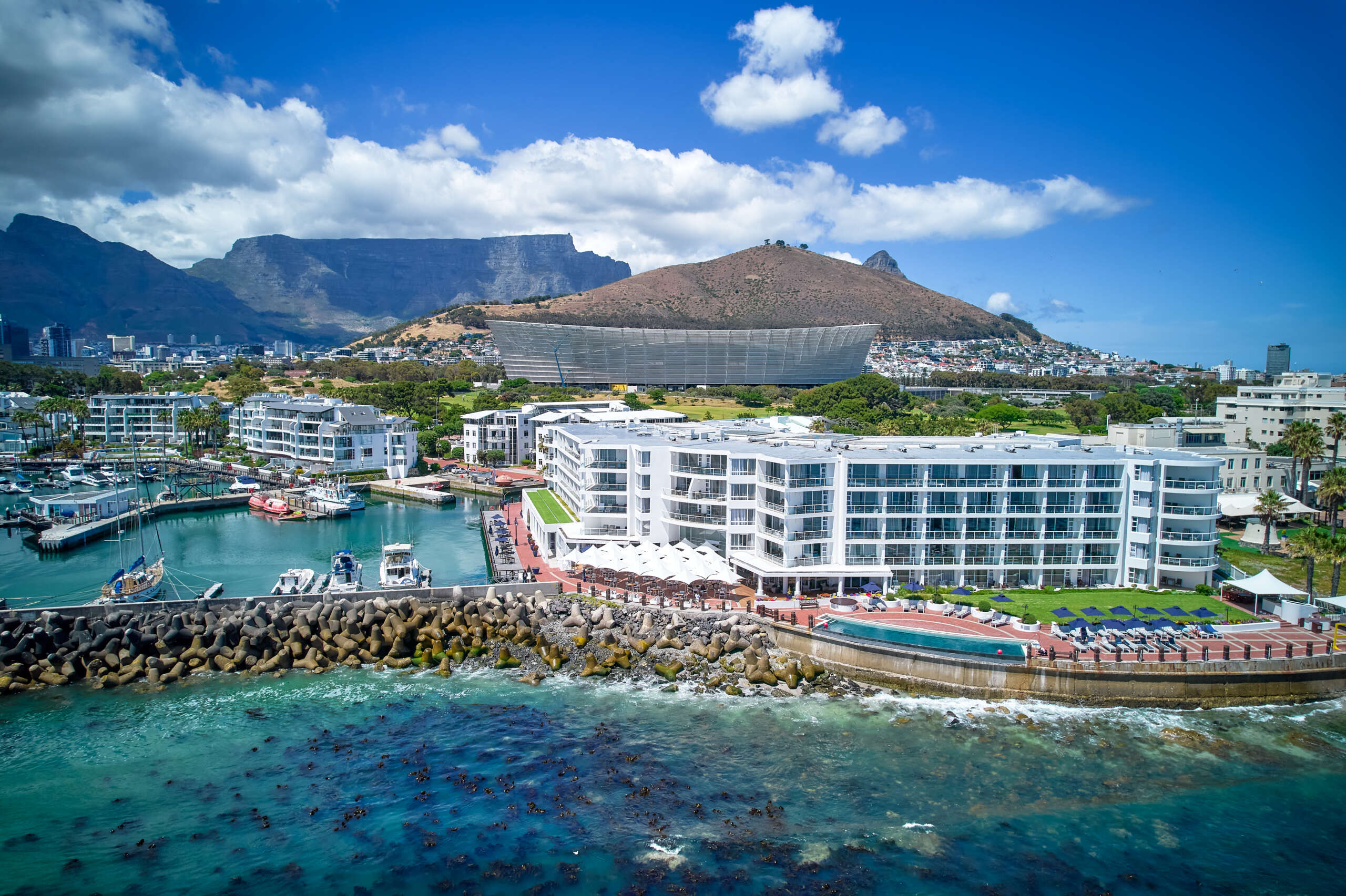
Even where a short Uber is still needed, the length and number of those trips make a profound difference to a traveller’s time and peace of mind. Anchoring at a private precinct that sits directly adjacent to a marina, the beaches and the city centre cuts that travel down to mere minutes.
Luxury travellers are pivoting toward the more serene, distinct enclave of the Atlantic Coastline. This unique micro-location offers a rare atmospheric luxury: it sits entirely removed from the dense, frantic bustle of the commercial city, yet remains a literal footstep close enough to feel completely immersed in Cape Town’s urban buzz. From this exclusive vantage point, visitors can stroll between the quiet historic harbour and the vibrant Oranjezicht City Farm Market. Meanwhile, private beaches, Table Mountain, and the historic city centre remain at their fingertips, turning the surrounding neighbourhoods into a natural extension of the hotel experience.
Hotels are responding to this shift by thinking less about themselves as destinations and more about how they fit into the wider neighbourhood. At Radisson Collection Hotel, Waterfront, General Manager Alison Mckie says the questions guests are asking have changed.
“What has changed most is how guests experience the destination. Guests are no longer planning their stay around a handful of attractions, but around a collection of experiences that are all within easy reach. From the ocean and promenade to iconic landmarks, outdoor adventures and the city’s vibrant neighbourhoods, our location allows guests to experience the very best of Cape Town with minimal travel and maximum time enjoying the destination,” says McKie.
That slower pace also extends to the food experience at the Radisson Collection Hotel, Waterfront, with Toboago’s introducing a new seasonal menu alongside Fire and Tide, a weekly seafood lunch built around flame-grilled cooking. With the ocean on its doorstep, the offering brings together some of the simpler pleasures of a Cape Town summer: fresh seafood, time outdoors and a setting that makes it easy to linger rather than rush on to the next stop.
The appeal of staying close to all action is not that travellers have stopped waiting to see Cape Town. It is that they are increasingly looking for a way to experience more of it without spending their holiday getting there.