
Share This Article
One day your baby is gazing up at you from their play mat, and before you know it, they’re sitting up, reaching for everything in sight and trying to make a great escape across the lounge floor! The first year is full of exciting changes, as little ones develop new physical skills, explore their surroundings and begin making sense of the world around them.
While every baby follows their own developmental timeline, understanding common milestones can help parents recognise progress, encourage new skills and make everyday moments more fun. The secret? You don’t need an expensive collection of toys or a perfectly planned activity schedule. A little floor time, plenty of interaction and lots of opportunities to explore can go a long way.
Sitting up: A whole new perspective
Learning to sit opens up a new world for babies. With their hands becoming freer to reach, grasp and investigate objects, they can begin exploring their surroundings from a different perspective.
“Many babies start sitting with support at around four to six months and develop the ability to sit independently somewhere between six and nine months, although timing varies,” explains Sr Londe, independent midwife and Vital Baby’s trusted advisor.
How to help: Give your baby regular opportunities to play on the floor while they are awake and supervised. Sitting between your legs or with suitable support can help them practise balance, while placing an interesting toy just within reach encourages them to shift their weight and develop coordination. Stay close and make sure the surrounding area is safe, with soft toys and no hard edges nearby.
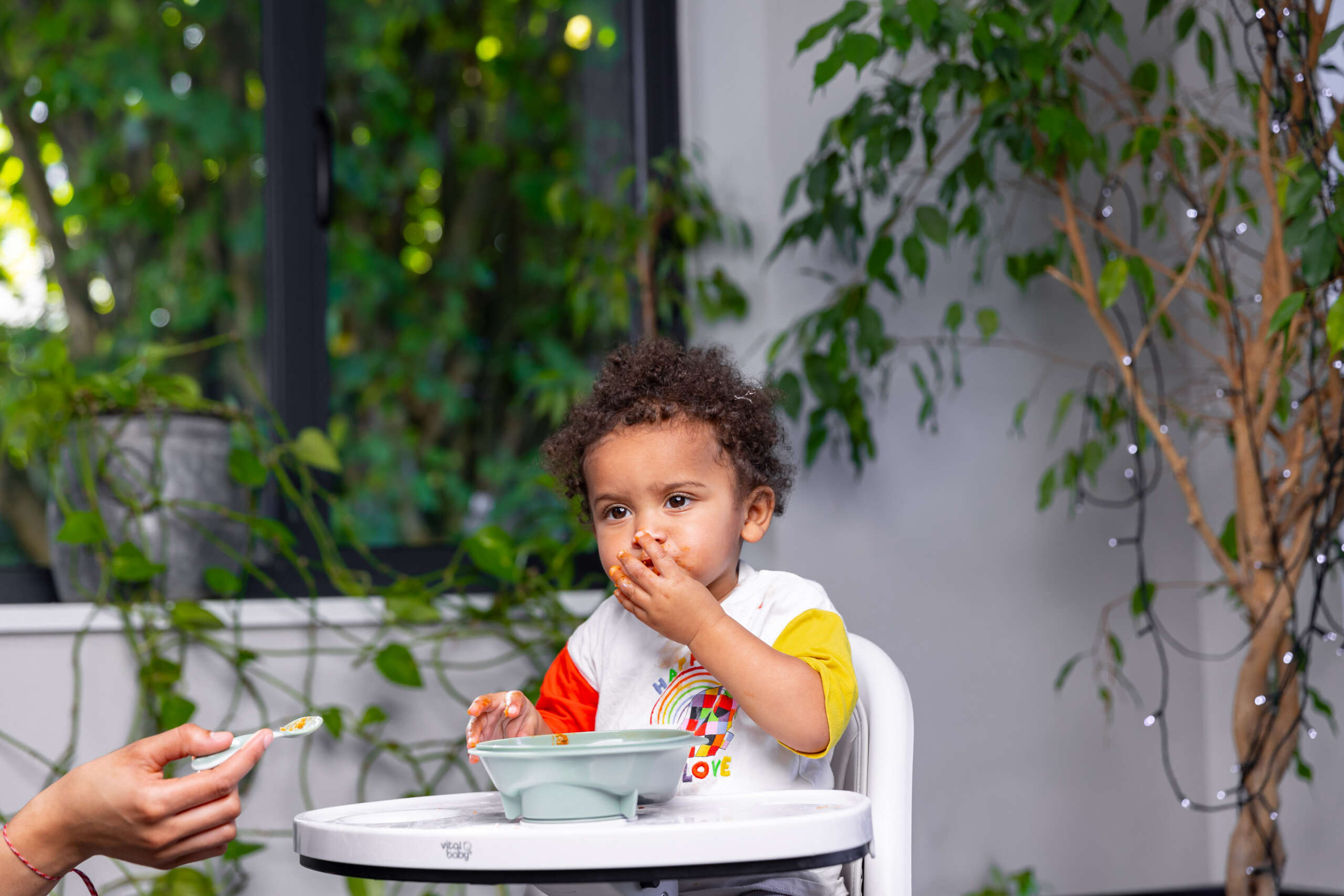
Mealtimes also become an important part of this stage. When your baby shows signs of readiness for solids, usually around six months, they need to be able to sit upright with good head control and coordinate swallowing food. A suitable high chair and age-appropriate feeding equipment, such as Vital Baby’s EarthSmart Weaning Spoons, can help make early food exploration more manageable.
Remember, readiness for solids is about developmental signs, not simply reaching a particular age.
Crawling: Let the adventures begin!
Once babies start moving independently, the entire house can suddenly become one enormous adventure playground. Crawling commonly develops between six and ten months, but some babies shuffle, roll, bottom-scoot or move straight towards pulling themselves up and walking without using a traditional crawling pattern.
How to help: Make floor play irresistible. Place a favourite toy a short distance away, get down on the floor with your baby or encourage them to reach towards you with an enthusiastic smile. These simple games help develop strength, balance, coordination and problem-solving skills.
Create a safe space for movement by securing furniture, covering sharp edges where appropriate, fitting safety gates and keeping small objects, cords, cleaning products and other hazards out of reach. Supervised floor play gives babies the freedom to practise new movements without unnecessary obstacles.
First teeth: Tiny arrivals, big feelings
Teething is another milestone that can bring excitement, dribbling, and a few unsettled days. Most babies get their first tooth at around six months, although teeth can appear earlier or considerably later. The lower front teeth are often the first to arrive.
Common signs include swollen or tender gums, increased drooling, chewing on objects, and temporary irritability. However, teething should not automatically be blamed for everything: a high fever, significant diarrhoea or a baby who seems seriously unwell warrants medical advice.
How to help: Gently massage sore gums with a clean finger or offer a firm, age-appropriate teether that has been chilled in the refrigerator. Avoid freezing teethers, as they can become too hard and injure delicate gums. Never tie a teether around a baby’s neck, and avoid teething necklaces because of choking and strangulation risks.
A purpose-designed teether, such as Vital Baby SOOTH Star Teethers, can give babies something suitable to chew while they explore different textures. Always supervise use and follow the manufacturer’s age and safety guidance.
Fine motor skills: Little hands, big achievements
From grabbing a rattle to picking up a tiny piece of food, babies gradually become more skillful at using their hands and fingers. Reaching, grasping, transferring objects between hands and eventually developing a pincer grip between the thumb and forefinger are all important steps towards greater independence.
These skills develop through repetition, so everyday activities are valuable learning opportunities.
Try these simple activities:
-
Reach and grab: Offer lightweight, baby-safe toys in different shapes and textures to encourage reaching and grasping.
-
Pass it on: Give your baby a suitable toy and encourage them to transfer it from one hand to the other.
-
Fill and empty: Older babies can explore putting large, safe objects into a container and taking them out again, with close supervision.
-
Finger-food practice: When your baby is developmentally ready for solids, offer suitable soft foods prepared in safe shapes and textures. Always supervise eating and follow age-appropriate choking-prevention guidance.
-
Book time: Let your baby touch sturdy board-book pages while you name pictures, animals and everyday objects.
Avoid toys or objects with small detachable parts, button batteries or loose magnets. Babies explore with their mouths, so anything within reach must be safe for mouthing and appropriate for their developmental stage.
Early learning: Play is serious business!
Babies learn through their senses, movement, and relationships with the people around them. Talking, singing, reading and playing together support early communication, social development and curiosity long before a baby says their first word.
You can encourage learning without turning playtime into a lesson. Sing a familiar song while changing a nappy, describe what you are doing during bath time, play peekaboo or make funny faces together. Name objects as your baby looks at them, respond to their babbling and give them time to communicate in their own way.
As babies grow, simple cause-and-effect games become fascinating. A toy that makes a sound when shaken, a ball that rolls away or a container that can be opened and closed introduces ideas about movement, actions and consequences.
Reading together is particularly valuable. Babies may initially be more interested in chewing the book or turning its pages than listening to the story, but that is all part of the experience. Repetition helps them recognise familiar words, sounds and pictures.
Above all, follow your baby’s interests. If they want to investigate the same toy for ten minutes, let them. If they lose interest after thirty seconds, try something else. Short, enjoyable bursts of play are often more useful than trying to keep a little one engaged in a structured activity.
Milestones are guides, not deadlines
“It is natural for parents to compare their baby’s progress with that of friends’ children or the milestones listed in parenting books,” says Sr Londe. “However, development is not a race, and babies can reach different skills at different times.“
Rather than focusing on a single achievement, look at your baby’s progress over time. If you are concerned about a missed milestone, a loss of previously acquired skills or a developmental difference, speak to your clinic sister, doctor or paediatrician. Early support can make a meaningful difference when a child needs additional help.
The best thing parents can do is offer a safe, loving environment filled with opportunities to move, explore, communicate and play. Celebrate the wobbly sitting, the first determined crawl, the tiny tooth, and every triumphant grab. These seemingly small moments are building blocks for bigger things to come.
And remember: your baby doesn’t need you to make every moment educational. Your attention, reassurance and willingness to explore the world together are among the most valuable gifts you can offer.
Vital Baby is a family-run business with over 45 years of experience in the baby industry. Their mission is to create products that make family time effortless and enjoyable for parents. The Vital Baby range, now including biodegradable and recyclable EarthSmartproducts, is 100% BPA-free and covers every stage of your baby’s development, from feeding and weaning, to hygiene and soothing. Explore the range online at Vital Baby® (vitalbabyshop.co.za) and Amazon, or find at Clicks, Dischem, and selected Woolworths.